Virginia City, Montana 1969
$20.00
Instant royalty-free digital download. No watermark. You will receive a JPG image of between 3000 and 4000 pixels on the longest side. Perfect for prints, books, media, creative projects, and more. The download link will appear in the checkout after successful purchase.
- Buy 5 or more photos and get a 15% discount
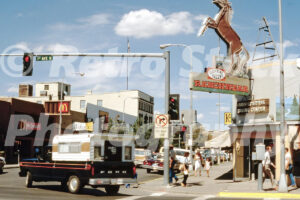
This photograph, taken in Virginia City, Montana, in 1969, captures one of the most atmospheric and historically intact towns in the American West. In the center of the scene are two of its most recognizable landmarks: the Bale of Hay Saloon, believed to be one of Montana’s oldest continuously operated bars, and the Virginia City Opera House, where live shows once entertained gold miners, merchants, and travelers during the height of the frontier era.
Virginia City was founded in 1863, after one of the richest placer gold strikes in the Rocky Mountains transformed a remote valley into a booming mining settlement almost overnight. Within months, saloons, general stores, hotels, and theaters lined the dusty streets, and the town became the territorial capital of Montana from 1865 to 1875. At its peak, thousands of people crowded into the area, drawn by the promise of fast fortunes and faster living. But like many mining towns, its prosperity faded once the gold played out, and by the early 20th century Virginia City stood on the edge of becoming a ghost town.
Instead, its buildings—and its stories—were saved. Beginning in the 1940s, preservationists Charles and Sue Bovey purchased and restored many of the structures seen in this photograph, helping transform the community into a living museum of the Old West. Their efforts kept the original character intact, which is why in images like this one the town appears almost frozen in time.
Today, Virginia City remains a National Historic Landmark and a popular summer destination. Visitors can stroll wooden sidewalks, tour museums, ride the historic Alder Gulch Railroad, watch melodramas in the Opera House, and still grab a drink at the Bale of Hay Saloon—just as people did more than 150 years ago. Much of the town looks remarkably similar to the view captured here in 1969: weathered, authentic, and full of stories, offering one of the closest experiences available of what life was like during the height of the American gold rush.