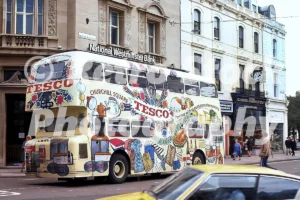
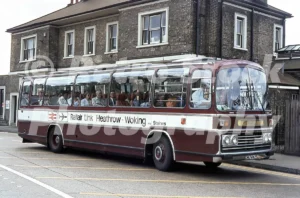
Chelmsford Bus Station, Essex 1980s
$20.00
Instant royalty-free digital download. No watermark. You will receive a JPG image of between 3000 and 4000 pixels on the longest side. Perfect for prints, books, media, creative projects, and more. The download link will appear in the checkout after successful purchase.
- Buy 5 or more photos and get a 15% discount
Launched in the early 1970s as a bold step toward standardised, modern public transport, the Leyland National bus quickly became one of the most recognisable vehicles on Britain’s roads. Built as a joint venture between British Leyland and the National Bus Company (NBC), the Leyland National aimed to replace a fragmented, aging fleet with a single, purpose-built bus for rural and urban service alike.
A New Era for Bus Design
The concept behind the Leyland National was rooted in rationalisation and modernity. Rather than individual operators sourcing different chassis and body combinations, the NBC and Leyland collaborated to create an integrated single-deck bus with a modular design, built entirely at a new purpose-built factory in Workington, Cumbria.
The bus was officially launched in 1972, and its design broke from tradition in several ways:
-
Integral construction: chassis and body were built as one unit, reducing weight and improving strength.
-
Square, boxy body shape with large windows for good visibility and passenger appeal.
-
A distinctive roof-mounted heating pod at the rear (later versions had different heating systems).
-
Standardised parts and panels to make repairs and maintenance easier and cheaper.
-
A clean, futuristic interior layout for the time.
Initially available in 10.3 and 11.3-metre lengths, later models also included shorter and longer versions.
Technical Features
Early Leyland Nationals were powered by the Leyland 510 6-cylinder horizontal diesel engine, which was known for its compact layout but also gained a reputation for being noisy and unreliable. Over time, the engine options were updated, with later models fitted with more conventional?and more dependable?engines such as the Gardner 6HLXB.
Most Leyland Nationals were equipped with semi-automatic gearboxes, and their low-floor design, though not as low as later low-floor buses, still made boarding easier than many of their older predecessors.
Widespread Use Across Britain
Between 1972 and 1986, over 7,000 Leyland Nationals were built, making it one of the most successful British bus types of all time. It became the standard single-decker for the National Bus Company, and was widely used by its subsidiaries across England and Wales. Operators such as Eastern Counties, Ribble, Midland Red, Crosville, and United all ran large fleets.
London Transport also used the Leyland National, albeit in smaller numbers, while Scottish Bus Group companies and municipal fleets adopted it more selectively.
The Leyland National could be seen everywhere?from small village routes in rural Shropshire to high-frequency urban services in Liverpool and Manchester.
Evolution: The Mark 2 and Decline
In 1978, Leyland introduced the Leyland National Mark 2, with a redesigned front end, improved heating, better corrosion resistance, and revised body panels. The Mark 2 looked sleeker and more contemporary, with square headlights and a less boxy appearance.
Despite these improvements, by the early 1980s the Leyland National was beginning to feel dated. Deregulation of the bus industry in 1986, changing operator needs, and increasing competition from foreign manufacturers signalled the end of its era. Production ceased in 1986, with the final vehicles delivered to NBC subsidiaries and export customers.
Preservation and Cultural Significance
Today, many Leyland Nationals survive in preservation. Enthusiasts regard them fondly for their period charm, their ubiquity during a transformative era in British transport, and their instantly recognisable silhouette.
| Photo options | Digital Download |
|---|