
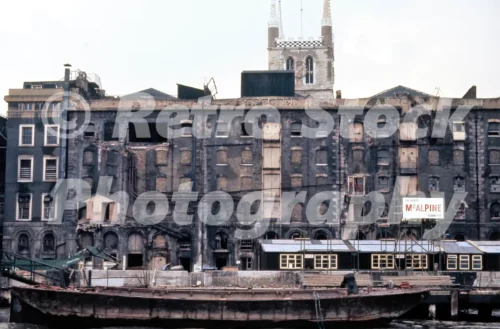
Hibernia Wharf, River Thames 1973
$20.00 $10.00
Instant royalty-free digital download. No watermark. You will receive a JPG image of between 3000 and 4000 pixels on the longest side. Perfect for prints, books, media, creative projects, and more. The download link will appear in the checkout after successful purchase.
Hibernia Wharf on the River Thames in 1973, showing the soot-darkened warehouse range at Montague Close with a moored barge in the foreground and the tower of Southwark Cathedral rising behind. The battered riverside buildings, with boarded openings, hoists and scarred brickwork, still belonged to the old working Thames world that had dominated this stretch beside London Bridge for generations. By the early 1970s the wharf was already in visible decline, and the temporary site huts and Sir Robert McAlpine & Sons Ltd board hint at the redevelopment pressures beginning to reshape the riverfront. It is a stark and atmospheric record of Hibernia Wharf in its last industrial phase, just before this part of the south bank was transformed.
About Retro Stock Photography
Retro Stock Photography specializes in genuine vintage color photographs from the 1950s through the 1990s, all available as royalty-free instant downloads. Our photos are popular for editorial features, books, magazines, websites, documentaries, advertising, social media, local history projects, creative design, and as unique gifts when printed.
All of our images are scanned directly from original slides and negatives, preserving their authenticity, detail, and character. And because we own the original photographs and copyrights, all of our collection is exclusive to us and not available elsewhere.
Buy any 5 downloads and receive 15% off your entire order.